
An Administrative Nightmare
An Agnes Blythe-Harrow

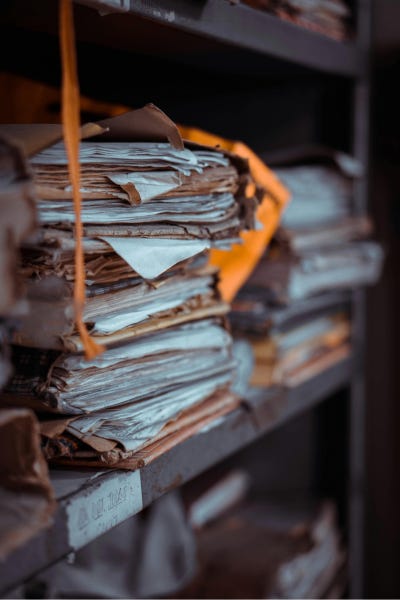
Tea was not, in my view, an unreasonable boundary.
There were very few points in the parliamentary day that could be relied upon to proceed without interruption, and I had long ago established that the late afternoon interval — tea, a sandwich of acceptable construction, and fifteen minutes in which no one expected me to justify the continued stability of the physical world — would be one of them.
On Thursdays in particular, this was non-negotiable.
I had just reached the midpoint of a perfectly serviceable cucumber sandwich when the door opened without the courtesy of a knock.
The girl who stepped inside had the look of someone who had been sent somewhere she did not belong and had only just realised it.
She paused on the threshold, as though expecting the room itself to object to her presence. Her hand remained on the handle a fraction longer than necessary, knuckles pale, before she forced herself to let go and close the door behind her with a care that suggested she had already broken something important elsewhere.
I did not speak.
It is a useful habit. People entrusted with tasks beyond their capacity will often explain far more than they intend if given sufficient silence.
She crossed the room quickly, then slowed as she approached the table, her pace adjusting in the vague, instinctive way of someone attempting to match an environment she did not understand. Up close, she was younger than I had first thought. Early twenties, perhaps. Competent on paper. Not yet accustomed to the particular forms of failure encouraged by government service.
“Professor Blythe-Harrow,” she said, with the careful emphasis of someone reciting a name she had been instructed to respect.
I inclined my head slightly. “You have found me.”
“Yes, ma’am. I—” She stopped, recalibrated, and tried again. “I was asked to come and get you.”
“That is generally the purpose of being sent.”
A flicker of uncertainty passed across her face, then settled into something more specific. Not embarrassment. Not quite.
Concern.
That, at least, was appropriate.
I set the sandwich down and took a measured sip of tea. It had cooled fractionally in my absence of attention, which I noted with some displeasure. The pot itself remained within acceptable parameters, which suggested the interruption had been recent rather than ongoing.
“Who,” I asked, “decided that this could not wait until I had finished?”
“Facilities,” she said, a touch too quickly. “And—” another hesitation “—someone from Internal Affairs, I think. They said it had already been looked at, but it keeps… coming back.”
“An encouraging choice of phrasing.”
Her fingers tightened slightly against the folder she was holding. I had not seen her arrive with it, which suggested either distraction on my part or a tendency toward clutching objects for stability. The latter seemed more likely.
“There’s an issue in the lower levels,” she said. “They’ve been calling it a moisture concern.”
“They would.”
I rose, smoothing the napkin beside my plate before setting it aside. The movement steadied her marginally, as though my compliance had confirmed that she had not entirely misjudged the severity of her errand.
“Which lower levels?” I asked.
“Archives,” she said. “Sublevel Two. And below that, I think. They weren’t very clear.”
“They rarely are.”
She shifted her weight. Something in her posture resisted stillness, a subtle imbalance that had nothing to do with nerves and everything to do with having been somewhere she could not quite account for.
I let my gaze rest on her properly.
There was a faint darkening at the hem of her trousers, not the clean line of Wellington rain but something more diffuse, as though the fabric had absorbed moisture from the air rather than contact with it. Her shoes bore the same mark. Not mud. Not water.
Saturation.
“Have you been down there yourself?” I asked.
“Yes, ma’am. Only briefly. They wanted me to—” she faltered, then forced the sentence through “—confirm the scope before escalating.”
“Of course they did.”
Her mouth tightened. “It didn’t seem like… water.”
“No,” I said, reaching for my coat. “It seldom does.”
She exhaled, not quite relief, but something adjacent. Recognition, perhaps, that the problem she had been sent to describe had finally been understood without further effort on her part.
I paused only long enough to take one final sip of tea. It had cooled beyond redemption.
“That is unfortunate,” I said, more to the cup than to her.
I set it down and reached for my coat.
“Lead the way, Miss—”
“Mia,” she said quickly.
“Mia,” I repeated. “Very well.”
She moved at once, relief lending her a sudden efficiency, and I followed without further comment.
I have found, over the years, that problems described as “moisture-related” rarely improve with distance, and almost never with oversight.
--
Archives Sublevel Two had been arranged to suggest control.
Plastic sheeting had been fixed along one wall with the kind of optimism usually reserved for temporary solutions that outlived their authors, and a dehumidifier had been installed beside it, humming with sufficient determination to imply that moisture, once identified, could be reasoned with. A handwritten notice had been taped at eye level: AREA UNDER MAINTENANCE, the lettering firm enough to suggest authority and vague enough to discourage further inquiry.
Two men stood beside it, both in the particular posture of individuals who had already decided that whatever they were looking at did not fall within their remit.
They straightened as we approached, relief passing briefly across their faces before settling into something more cautious when they recognised that relief had been premature.
“Professor Blythe-Harrow,” one of them said. “We weren’t expecting—”
“You rarely are,” I said, allowing my gaze to move past him.
The arrangement was neat. Entirely too neat. The sheeting had been drawn carefully across a section of shelving, and the floor beneath had been wiped clean in a way that suggested repetition rather than resolution. Even the air had been adjusted, cooled artificially to compensate for something that resisted the effort.
Behind me, Mia slowed.
“I showed them earlier,” she said, as though this might explain the condition of the space. “It was worse this morning.”
“Was it,” I said.
The dehumidifier clicked, cycled, and continued its work without visible effect.
I stepped closer to the sheeting.
“Have you identified a source?” I asked.
“There’s no active leak,” the second man said quickly. “We checked the pipework. It’s been… contained.” he paused. “Sort of.”
He gestured vaguely toward the barrier, which was doing an admirable job of concealing whatever lay behind it from anyone inclined not to look too closely.
“Then I imagine you will not object to me verifying that conclusion.”
There was a brief hesitation. It lasted just long enough to confirm that objection had, in fact, been considered.
“Of course,” he said, stepping aside.
I drew the sheeting back, and, for a moment, nothing in particular presented itself as unusual.
The shelving remained in place. The files were arranged as expected, their labels aligned, their edges softened only slightly where the air had settled against them. The lighting held steady, the hum of the machinery continuing without interruption.
Then I reached out and touched the nearest stack.
The surface yielded in a way that wouldn’t have alarmed anyone inclined toward optimism. The paper retained its shape, its structure, its careful categorisation.
But it gave, fractionally, beneath my fingers, like something that had ceased to understand the purpose of rigidity.
Behind me, Mia made a small, involuntary sound.
“It wasn’t like that before,” she said. “They were just… damp.”
“Yes,” I said, pressing lightly again, feeling the resistance shift and settle. “I expect they were.”
Then, from somewhere beyond the visible shelving, came the unmistakable sound of papers being collated with slow and almost sensual precision, followed by a faint internal rustling I had not encountered since Whitehall briefly attempted post-war streamlining.
I closed my eyes briefly.
“Oh, for heaven’s sake,” I said, before relief could fully betray itself. “It’s just Cicero.”
The shelving shifted again behind me with a wet internal sound I chose, for the moment, to ignore.
I turned to the others.
“Leave the area immediately. Seal the lift access behind you and do not permit anyone below Sublevel One until I say otherwise.”
The shorter of the officers hesitated, torn briefly between professional obligation and the increasingly obvious possibility of being consumed by stationery.
“Professor… are you certain?”
“Oh yes,” I said. “I’ve dealt with him before. He’s perfectly manageable provided no one attempts reform.”
That appeared to satisfy none of them.
I raised a finger.
“And not a word of this to anyone. Especially Communications. They encourage him.”
Neither Facilities officer required further instruction. They retreated at once, all commitment to oversight dissolving beneath the sudden and entirely reasonable instinct for survival.
Mia lingered.
Her gaze moved from the shelving to me and back again.
“Professor,” she said carefully, “you said Cicero.”
“Yes.”
Her expression brightened despite herself.
“You mean, the ghost of Cicero is haunting Archives Sublevel Two?”
Behind the shelving came a soft, deeply offended rustling sound.
I closed my eyes briefly.
“No, Mia,” I said. “That would be considerably less inconvenient.”
The shelving behind the plastic sheeting shifted inward with a slow, damp sigh. Files compressed against one another, their labels disappearing beneath folds of softened paper and pale adhesive threads that stretched and tightened with unsettling delicacy.
A moment later, somewhere within the shelving, something decided speech would now be appropriate.
“Agnes,” it said warmly. “You’ve aged.”
I opened my eyes.
“So have you,” I said. “Though in your case I suspect fungal spread is unavoidable.”
A shape pressed gradually outward from the shelving, assembling itself with patient, hideous care. Limbs formed first, though only approximately, their structure suggested rather than resolved beneath layers of compacted paper and translucent pulp. A face followed some moments later, features surfacing and sinking again as though memory alone was insufficient to maintain them properly.
Mia made a small choking sound behind me.
The creature inclined its head politely.
“New Zealand suits you,” Cicero observed. “The atmosphere is wonderfully damp. And Parliament…” A soft internal rustling passed through him that I eventually recognised as pleasure. “Agnes, I haven’t eaten this well since the coalition governments of the seventies.”
“Yes,” I said dryly. “Modern governance has been very generous to your people.”
“You say that as though I should apologise.”
“I say it as someone who read the Treasury projections.”
Cicero laughed then, a dreadful sound like wet paper folding repeatedly in careful hands.
“I did wonder whether they would eventually lure me back.” His gaze drifted slowly across the shelving around him. “So much deferred action. So many unfinished inquiries. Entire strategic frameworks abandoned before maturation.” Another contented rustle passed through the surrounding shelves. “You’ve cultivated a magnificent habitat.”
Behind me, Mia spoke before wisdom could intervene.
“You know him?”
Cicero’s half-formed features brightened immediately.
“Oh, Agnes and I go back years,” he said. “Lloyd George, mostly. Terrible man. Wonderful administrative residue.”
I pinched the bridge of my nose. I refused to revist that ghastly memory.
“You were considerably smaller then.”
“You were considerably blonder.”
Cicero adjusted himself slightly within the shelving, paper fibres shifting softly beneath the movement.
“You know,” he said conversationally, “I was quite concerned after the nineties. Efficiency drives. Digitisation. For a time I genuinely believed we might disappear entirely.”
“That remains my professional preference.”
“Yes, well.” A modest rustling passed through the surrounding shelves. “Fortunately, modern governance adapted.”
Behind him, somewhere deeper beneath the archives, came another sound, softer than the first and considerably further away, carrying the same slow, methodical rhythm of papers being collated with patient and almost sensual precision.
Then another answered it.
Mia went very still beside me.
I did not, though I felt a brief and deeply unwilling surge of relief all the same. Cicero had always been a social creature by the standards of his kind, and I had occasionally suspected that the long decades spent half-starved beneath increasingly competent governments had affected his temperament rather severely.
Apparently the problem had resolved itself.
Cicero regarded me with something approaching sympathy.
“Oh, Agnes,” he said gently. “Did you really think I’d nest alone beneath Parliament?”
The shelving behind him shifted again, not randomly but with the slow internal coherence of something large settling more comfortably into its environment, and for the first time since entering Sublevel Two I began to understand why Facilities had replaced the carpet three times in six months.
That was going to be an administrative nightmare.
✦ ✦ ✦
Author’s note: Written for Day 8 of the Halls of Pandemonium challenge. Agnes Blythe-Harrow has now appeared twice during this challenge cycle, and I fear she may be settling in with the same quiet persistence as a parliamentary moisture concern.
Agnes’ earlier encounter with parliamentary instability during the Halls of Pandemonium challenge can be found here: The Five-Part Structure.
